
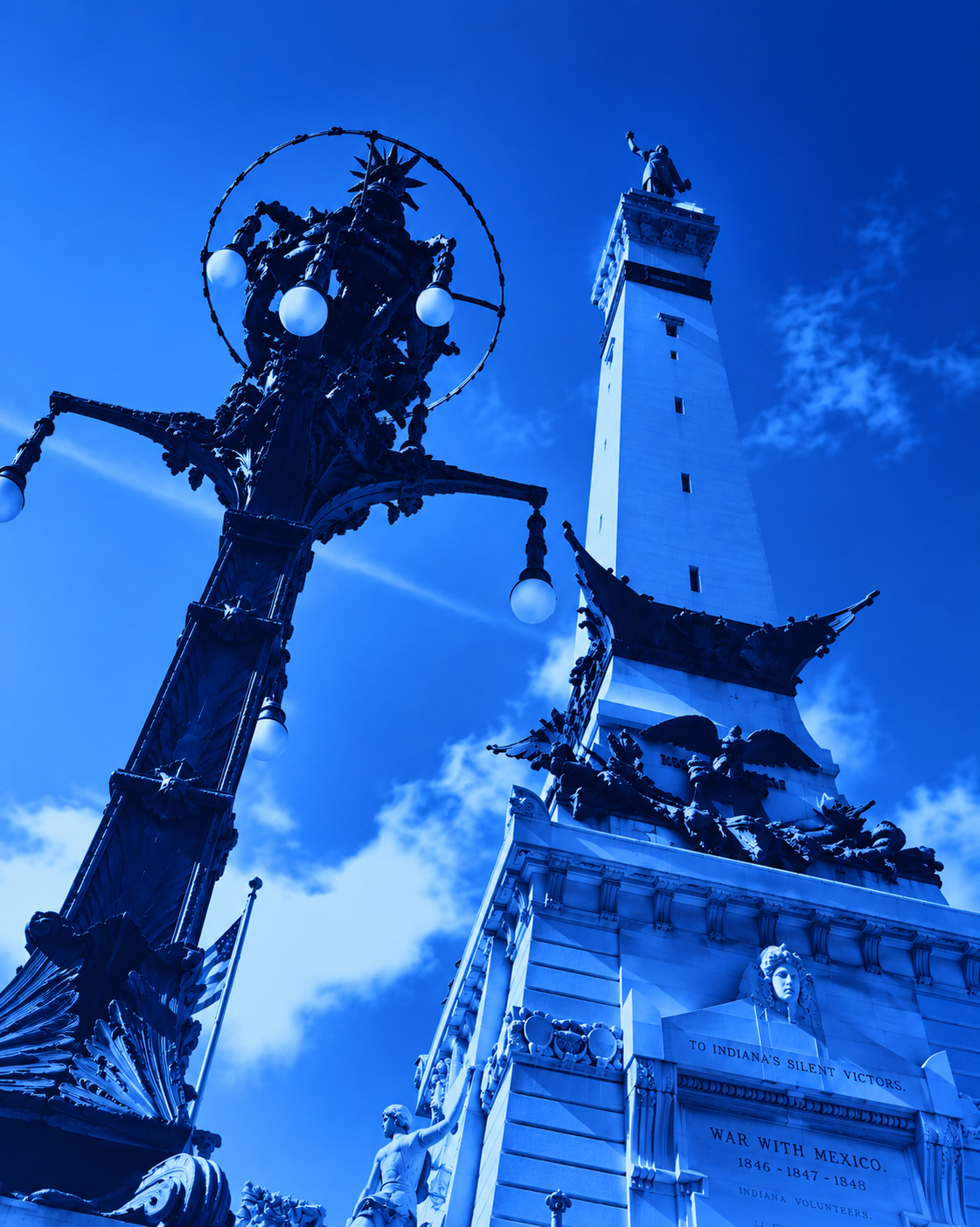
In the summer of 2006, everything I owned fit inside a duffel bag, and every night I slept with my head on top of it. I was staying at Lighthouse Mission in downtown Indianapolis with roughly two hundred other men. About a hundred had bunk beds on the seventh floor. Another hundred of us slept downstairs in the dining room and atrium, where the tables eventually gave way to mats spread across hard tile. In the room where I stayed, around seventy-five men slept within a couple of feet of one another. Once everyone settled in for the night, there wasn't much personal space left to claim.
During my first week there, I barely slept. I was learning the noises of a room filled with that many strangers and trying to convince my body that it was safe enough to close my eyes. Everything I possessed was inside that duffel bag, so I tucked it beneath my head and used it as a pillow. I figured anyone who wanted to steal something from me would at least have to pull it out from underneath my sleeping head first. At twenty-four years old, I was already experiencing homelessness for the third time, so the larger experience of losing stability had become disturbingly familiar.
My life had been unraveling in different ways for years. I was living with mental illness that had never been properly treated, and addiction had often served as my attempt to quiet things inside me that I didn't understand. Addiction brought consequences that multiplied over time. Relationships disappeared. Trust disappeared. Stability disappeared. Eventually places to live disappeared too. For the first month or two at Lighthouse, I sat inside the circumstances of my life and stared at everything that had gone wrong until I had nearly made myself delirious with misery.
I was clean and sober during this stretch, though addiction would return brutally later that year. Sobriety left me with the uncomfortable task of looking clearly at the life underneath all that chaos. I had almost no family or friends left to speak of, and whatever future I wanted would have to be assembled from the ground up. Eventually, I got tired of spending every day attending my own funeral. I found a part-time job working the front desk at a downtown hotel about two blocks from Lighthouse. It gave me somewhere to be, put a little money in my pocket and reminded me that I could still walk into a place, do a job and function in the world.
I knew I needed to rebuild my life, though I had no idea what I wanted to build. A five-year plan was beyond me. Most days, a five-day plan would have been ambitious. What I did have was an approaching summer and a growing desire to stop treating every waking hour as evidence that my life had failed. I would eventually have to decide what came next, who I wanted around me and what kind of person I wanted to become. I decided I could spend a few months learning how to enjoy my own company first.
Indianapolis was going to be my playground.
The mission operated according to a rhythm that quickly became familiar. Breakfast was served at eight every morning. At nine, the back gate opened, and anyone who wasn't enrolled in the recovery program had to leave. We could return around noon for an hour and then head back out until dinner. The evening meal was open to people from the surrounding community as well. After they left around six, the gates were locked, and those of us staying at Lighthouse were inside for the night. Between those two gates was an enormous stretch of daylight that belonged almost entirely to me.
I developed a morning ritual. I brushed my teeth, washed my face, changed clothes and put on cologne. That last detail makes me smile now because there is something wonderfully stubborn about it. I could be sleeping on a mat in a room with seventy-four other homeless men and still walk out the door smelling good. I wanted to feel like myself when I stepped into the city. I packed my backpack and made sure my notebook was inside because I was writing constantly that summer. There was usually a pack of cigarettes somewhere on me, a Zippo lighter in my left pocket and about twenty dollars in my wallet whenever I could manage it. Twenty dollars meant food, coffee, or enough money to handle whatever small need appeared during the day.
A BACKPACK
A NOTEBOOK
A PACK OF CIGARETTES
A ZIPPO IN MY LEFT POCKET
TWENTY DOLLARS
HEADPHONES
INDIANAPOLIS WAS WAITING OUTSIDE
The headphones completed the ritual. Music was so constant that I have trouble separating my memories of that summer from what I was listening to. At first I carried an MP3 player and later an iPod. Dave Matthews Band and Jack Johnson were in heavy rotation, along with an enormous amount of hip-hop that I curated obsessively. Eventually, after the hotel job put a little money in my pocket, I bought a Motorola RAZR. For most of that summer, Indianapolis had music playing underneath it, a private soundtrack following me from block to block as I walked.
I usually left Lighthouse and headed west toward the center of downtown. Monument Circle became one of my regular starting points. From there, I might wander toward the canal, through White River State Park and over toward the IUPUI campus before deciding what kind of day I wanted to have. Some mornings I had an idea of where I was going, while plenty of others were built one block at a time. If a street looked interesting, I could turn down it. If something caught my attention, I could stop and stare at it for as long as I wanted. I could sit beside the canal with music in my ears and fill pages in my notebook, walk until my legs were tired, find somewhere to buy a drink, sit for a while and start again.
I watched people too. I smiled and nodded as they passed, and every once in a while one of those small acknowledgments became a conversation. I met people around my age near the college campus and talked with strangers sitting outside restaurants around Monument Circle. Some people passed through my life for ten minutes, while others appeared often enough that they began to feel familiar. I had no real social circle waiting for me somewhere else, which left me unusually open to whoever happened to be standing in front of me. After years of being pushed around by my own chaos, I suddenly had long stretches of time when almost nobody was asking anything from me.
There was a peculiar freedom in those days that I still have trouble describing without making the circumstances sound easier than they were. Sleeping on tile among dozens of men was difficult. The uncertainty was real, and so was the history that had brought me there. Once I decided to claim that summer, though, I stopped waking up ashamed of where I would sleep that night. I connected with some of the guys, learned the rhythms of the place and accepted the mat waiting for me when the gates closed. Lighthouse became part of the strange experience I was living, and Indianapolis became the enormous world waiting outside every morning.
My days began to feel bigger. I could wake up with no idea what I would see, who I would meet, what I would write or where my feet would carry me before dinner. For perhaps the first time in my life, I had a season when I was deliberately choosing my own company and learning what interested me when nobody else was around to tell me what should. Then I bought that RAZR, and suddenly I had a camera in my pocket while I was doing all that wandering.
THE MISSION
THE SIDEWALK
THE CITY
THE PEOPLE
THE NOTEBOOK
THE CAMERA
I BEGAN LOOKING OUTWARD AGAIN
Anyone who came of age after smartphones will probably look at these photographs and wonder why I bothered saving them. The camera was primitive. The pictures are grainy and soft. Colors occasionally drift into strange territory, bright skies disappear into blown-out patches of white, shadows swallow details, and some images look as though the lens had been rubbed against the inside of my pocket immediately before I took them. In 2006, I thought that phone was incredible. A flip phone with a color screen and a camera still felt like carrying a small piece of the future around in your pocket.
I began pointing it at whatever made me stop walking.
I photographed buildings reaching into the sky and monuments I had probably passed before without really seeing. I photographed water, statues, fountains, public art and pieces of architecture from odd angles. I liked looking up and finding perspectives that made familiar things appear strange for a moment. Sometimes the light hitting an object was enough to make me reach for the phone. Other times I simply saw something and felt an urge to keep it. I probably couldn't have explained why half of those things seemed beautiful to me, and I didn't need to.
There was no audience waiting for the pictures. Instagram didn't exist yet, and I wasn't collecting likes, hearts or comments. The photographs existed because something had caught the attention of a homeless twenty-four-year-old walking around Indianapolis with music in his ears, and for a few seconds he thought it was worth remembering. Looking through them more than twenty years later, that may be what I love most about them. They preserve what my eyes were drawn toward before I had any reason to imagine another person would someday care about seeing them.
The collection also reveals something about that summer that I couldn't have articulated while I was living it. During those first miserable weeks at Lighthouse, I could barely see past my own circumstances. Walking widened my field of vision. There were buildings to study, music to listen to, strangers to meet, poems to write and whole afternoons waiting to become something. I had spent so much of my young life consumed by whatever crisis was happening inside me that simply becoming curious about the world again felt significant.
My notebook became another way of collecting what I saw. I wrote religiously, producing poetry that included some of the best writing I had managed up to that point. The pages also carried plenty of rage and relentless scrutiny of my own life. I tried to understand how I had arrived at twenty-four with so much wreckage behind me. I wrote about beauty when I found it, despair when it followed me, strangers who interested me and the person I still hoped I might become somewhere down the road. My creativity felt unbound because there was no audience to satisfy and no larger project to complete. I wrote because I needed somewhere to put everything I was seeing and feeling.
Some of those notebooks survived, and eventually I want to bring pieces of them into these pages. There is something important to me about allowing the young man who actually lived these experiences to speak alongside the older man who has spent two decades trying to understand them. Memory changes as we do. A sentence written on a downtown bench in 2006 carries a kind of truth that I cannot recreate in 2026, no matter how clearly I remember the day.
As the summer unfolded, the men at Lighthouse began taking up more space in those notebooks. Every evening, after spending hours walking through a city full of people going to jobs, restaurants, classes, apartments and homes, I returned through the gates and entered the strange little civilization of men who slept beside me. By then, I was learning their names and pieces of their histories. I had arrived with assumptions about how people became homeless, many of them built around addiction and destructive choices because I understood both personally. Living within two feet of dozens of homeless men complicated those assumptions very quickly.
One man had watched his marriage collapse after his wife cheated on him and took the children. He lost his job, began drinking heavily and eventually watched the remaining pieces of his life fall away. Other men lived with serious mental illness that desperately needed treatment, yet their lives had become a revolving door of shelters, streets, petty crimes and jail. I met men coming out of prison who genuinely wanted productive lives and could not seem to find the foothold necessary to begin. I also met addicts, liars and men who had burned through nearly everyone willing to help them. Some could make seventy-five people laugh hard enough to forget for a few minutes where we were sleeping. Others shared what little they had, carried heartbreak they rarely discussed, or tried desperately to look tougher than they felt. Several of those descriptions could belong to the same man.
The mission became a kind of carnival tent in my memory, filled with an unbelievable cast of characters thrown together under one roof. Over several periods of homelessness and several rescue missions, I would meet people whose stories were bizarre, funny, painful and occasionally difficult to believe even though I had witnessed parts of them myself. Many deserve essays of their own, and some of those stories will eventually appear here. A few of the men I met during this period changed the way I see people to this day.
9:00 A.M.
THE BACK GATE OPENED
INDIANAPOLIS
MILES OF SIDEWALK
6:00 P.M.
THE GATES CLOSED
EVERY DAY, I WALKED BETWEEN TWO WORLDS
During daylight, I wandered Indianapolis with headphones over my ears, filling a cheap phone with photographs and a notebook with whatever moved through my head. At night, the gates closed behind me and I returned to seventy-five mats laid across a tile floor. The summer I had declared my personal playground was quietly becoming something much larger. I had given myself those months to discover who I was, and the men inside Lighthouse were beginning to shape how I understood everyone around me.
I also had no idea how dramatically my own story inside that building was about to change. Before long, the freedom of that summer would give way to one of the darkest and most dangerous stretches of my young life. Crack cocaine would enter the picture. I would place my trust in people I should never have trusted. What followed would involve betrayal, violence and a situation that I can only look back on now and recognize as having the potential to become something far worse. Eventually, I would be thrown out of Lighthouse altogether. A year later, after more homelessness and more wreckage, I would walk back through those doors, and that second stay would begin changing the direction of my life.
During the summer of 2006, all of that remained somewhere beyond the horizon. I was twenty-four years old, clean and sober, carrying a notebook in my backpack and a Zippo in my left pocket. Dave Matthews Band, Jack Johnson or some carefully chosen hip-hop track was probably playing in my headphones. There was twenty dollars in my wallet if I was lucky, a terrible little camera in my phone, and miles of Indianapolis sidewalk waiting outside. Every morning after breakfast, the routine began again.
At nine o'clock, the back gate opened, and I walked...